Blog / What EPPP Passers Actually Do Differently
What EPPP Passers Actually Do Differently
The passers did four things differently. They took two to three full-length, timed practice exams. They hit 83% or better on a full sim before booking test day. They chased accuracy, not quiz volume. And they spread the work over weeks instead of cramming. The rest of this post is the data behind each one.
Most EPPP advice is based on vibes. Study hard, do lots of questions, believe in yourself. I wanted something better, so we started asking every user who took the real exam to report back: pass or fail, score, and what their prep looked like.
The first seven passers analyzed here told us they passed. Three people told us they did not. (The dataset has since grown to nineteen results; see the update notes below.) I sat down with the actual usage data behind every one of those reports, and the patterns are sharper than I expected. Here is what the passers did differently, in plain terms.
One honest note before we start: this is a small sample, and it is self-reported. Treat these as strong patterns, not laws of physics. I am a clinical psychologist, and I will not pretend n=10 is a randomized trial. But when every passer shows the same behavior and no failer does, that is worth your attention.
Finding 1: Every Passer Took Full-Length Practice Exams. Almost No Failer Did.
This was the cleanest split in the data.
Every passer we have platform data for took at least two full-length simulated exams (150+ questions, timed) before test day. Most took three. The people who reported failing took either zero full sims or exactly one.
Not topic quizzes. Not 20-question check-ins. Full sims. There is something different about sitting for a 4-hour exam: the fatigue, the pacing, the moment at question 140 where your brain wants to quit. You cannot practice that in short bursts, the same way you cannot get ready for a marathon by sprinting around the block.
If you do only one thing from this article, do this: schedule full-length practice exams into your plan, plural.
Finding 2: Passers Crossed 83% on a Full Sim Before Test Day
We have written before about the 80% readiness line. The new data sharpened it.
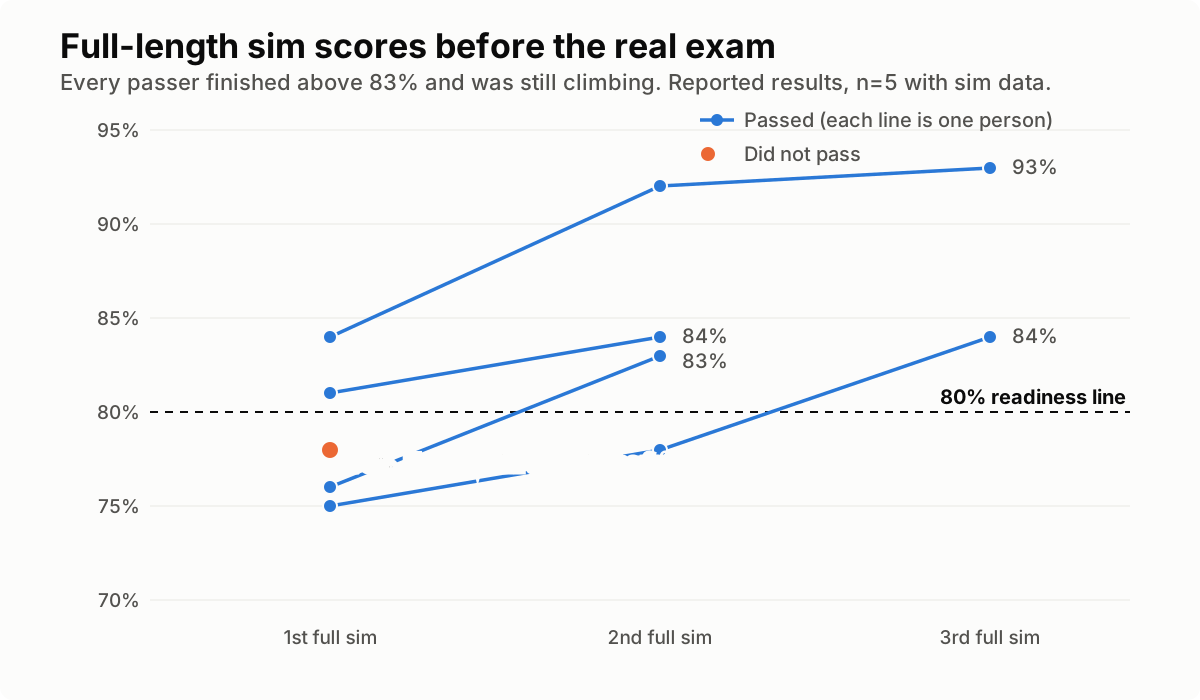
Every passer peaked between 83% and 93% on their best full sim before the real exam. The only person in our fail group who has taken a full sim scored 78%, still under the line, and that sim came while preparing for a retake after the failed attempt.
Two other details stood out:
- Every single passer's final sim was their best sim. 75 then 84. 76 then 83. 84 then 92 then 93. They walked into the exam on an upward slope, not a plateau.
- Sim scores tracked scaled scores. The person who peaked at 93% scored 711. The people who peaked in the mid 80s scored in the low-to-mid 600s. Practice performance was not noise. It predicted.
So the practical rule: do not book your exam because the calendar says so. Book it when a full, timed, 150+ question sim comes back at 83% or better, and your trend is still rising.
Finding 3: Accuracy Beat Volume. By a Lot.
Here is the pattern that surprised me most.
One passer did 75 quizzes averaging 94% correct. Another passer did only 3 quizzes, averaging 96%, plus two full sims. Both passed comfortably.
Meanwhile, one person who failed did 28 quizzes, more than two of the passers combined, but averaged 68% correct and never took a full sim.
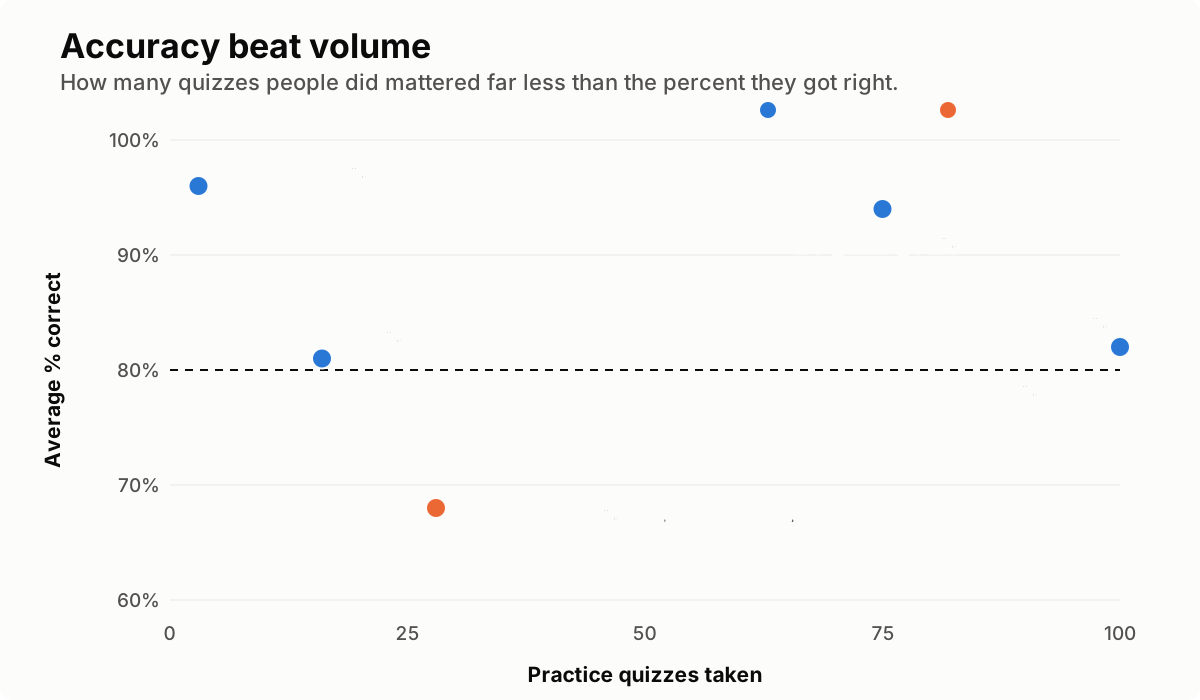
Grinding through questions while consistently missing a third of them is not studying. It is rehearsing confusion. The passers either started strong and confirmed it, or they drilled until their accuracy rose, then confirmed it with a sim. The number that mattered was never "how many quizzes." It was "what percent correct, and is it climbing."
Finding 4: Weeks of Consistency Beat Days of Cramming
The passers spread their work across 5 to 31 active study days, over spans of one to four months. One passer studied almost every single day for 24 days straight leading into the exam.
The people who failed compressed everything. One packed all their activity into 4 days. Another had 18 total minutes on the platform.
You already know this from every memory study ever run: spaced practice beats massed practice. The data from real exam outcomes says the same thing. There was no passer who crammed their way through.
Total hours, by the way, did not predict much. One passer logged about 25 hours, another logged about 7 and still passed. What separated outcomes was not time invested. It was full sims taken, accuracy reached, and consistency held.
The Part Nobody Talks About: Who Actually Fails
Here is the finding that changed how I think about this exam.
All three people who reported failing took their exam either before they found us or within days of signing up. One failed a full seven months before joining. The others reported their result less than a week after creating an account, with minimal prep time logged.
In other words: among the first ten results analyzed here, nobody who prepared on the platform through to their exam date has failed. Zero. Every fail report came from someone who arrived after the damage was done, looking for a better way before their retake.
(Update, August 20: at nineteen results this still holds. Every fail report we have came from someone whose exam date was before their signup date. The fuller picture, including why that stat is narrower than it sounds, is here.)
I am not spinning that as magic. The sample is small, and people who prepare seriously with any structured method pass at higher rates. But it does tell you something important if you just failed: the problem was probably not you. It was a prep approach with no full sims, no accuracy target, and no readiness signal. That is fixable. We wrote a full guide on what to do after failing the EPPP.
What Passers Say the Real Exam Felt Like
The numbers tell you what passers did. Their own words tell you what the exam was like on the other side.
Update, July 27: the highest scorer in this data set, the 711, sent us a full debrief of exam day after this post went up. What helped, what almost hurt, and the one mistake even they made. Read it here: Inside a 711: what our highest scorer told us about the real EPPP.
Update, August 6: four more results have come in since this post was written, fourteen total, and two of the new passers each broke one of the rules below in ways worth learning from. The follow-up: Your practice scores dropped right before the EPPP. Can you still pass?. The passers' own words also now have a home: EPPP success stories, in their own words.
Update, August 20: the count is now nineteen: twelve passed, seven did not. The sharpest version of Finding 1 came out of this larger set. Not one of the seven people who reported failing had taken a full-length practice exam before test day, while every passer we can measure peaked at 83% or better first. The full breakdown, with a new chart: Am I ready for the EPPP? Every reported passer hit one number first.
One passer, who asked to stay anonymous, told us:
The EPPP questions were pretty similar to the practice tests. The exam questions were more general and less detail-oriented than expected. In that sense, the program over-prepares you for the content.
Over-preparation on content is exactly what you want. If practice runs slightly harder and more detailed than the real thing, exam day feels like a step down in difficulty, not up. That is the direction the surprise should run.
Another passer kept it short:
Your program was great for quickly covering a lot of the foundational content at a super reasonable price.
Dr. Yael Dror, a clinical psychologist who passed on her first attempt, described her four-month run:
thePsychology.ai was a massive support for me while I studied for the EPPP. I was able to get through all the material, quizzes, and exams within 4 months and successfully passed the EPPP on my first try!
And Dr. Lorin Singh used it as a targeted supplement rather than a full program:
I used the program more so for the assessments and stats section. It was pretty helpful and had information that I didn't see in Psych Prep.
Notice the range there. One person ran the whole program for four months. One used it to patch two weak domains. Both passed. The method flexes; the readiness signals do not.
The Passer Checklist
Pulling it together, the people who passed did four things:
- Took 2 to 3 full-length, timed practice exams. Not optional, not a nice-to-have. The single cleanest behavioral difference between passing and failing.
- Hit 83% or better on a full sim before booking test day, with scores still trending up.
- Chased accuracy, not volume. They watched percent correct and drilled weak areas until it rose, instead of counting completed quizzes.
- Spread the work over weeks or months. Nobody crammed and passed. Not one.
If you are missing one of these, that is your next study task, and it is probably not "read more chapters."
How to Know Where You Stand
If you cannot answer "what would I score on a full sim right now," you do not know if you are ready. That is not a character flaw, it is just missing data, and it is the exact gap that the failers in our sample never closed.
thePsychology.ai is built around these signals: full-length simulated exams, a readiness meter that tracks your best sim against the 80% line, and targeted quizzes for the domains dragging you down. It is free for a week, which is enough time to take a diagnostic and find out exactly where you stand.
The passers were not smarter than the failers. They just measured, and the measurement told them when to walk in. You can do the same.

Anders Chan, Psy.D. is a licensed psychologist and the founder of thePsychology.ai. He passed the EPPP on his first attempt with a score of 588 after starting from a 19% diagnostic.