Blog / We Read Huberman's Protocols. Then We Checked the Science Before Changing Your Study Plan.
We Read Huberman's Protocols. Then We Checked the Science Before Changing Your Study Plan.
Andrew Huberman's book Protocols came out recently, and one chapter is aimed directly at people like you: it covers focus, motivation, and learning. If you are studying for the EPPP, that chapter describes your daily life. Alertness before a study bout. Errors as the trigger for learning. Sleep as the moment the studying actually gets saved.
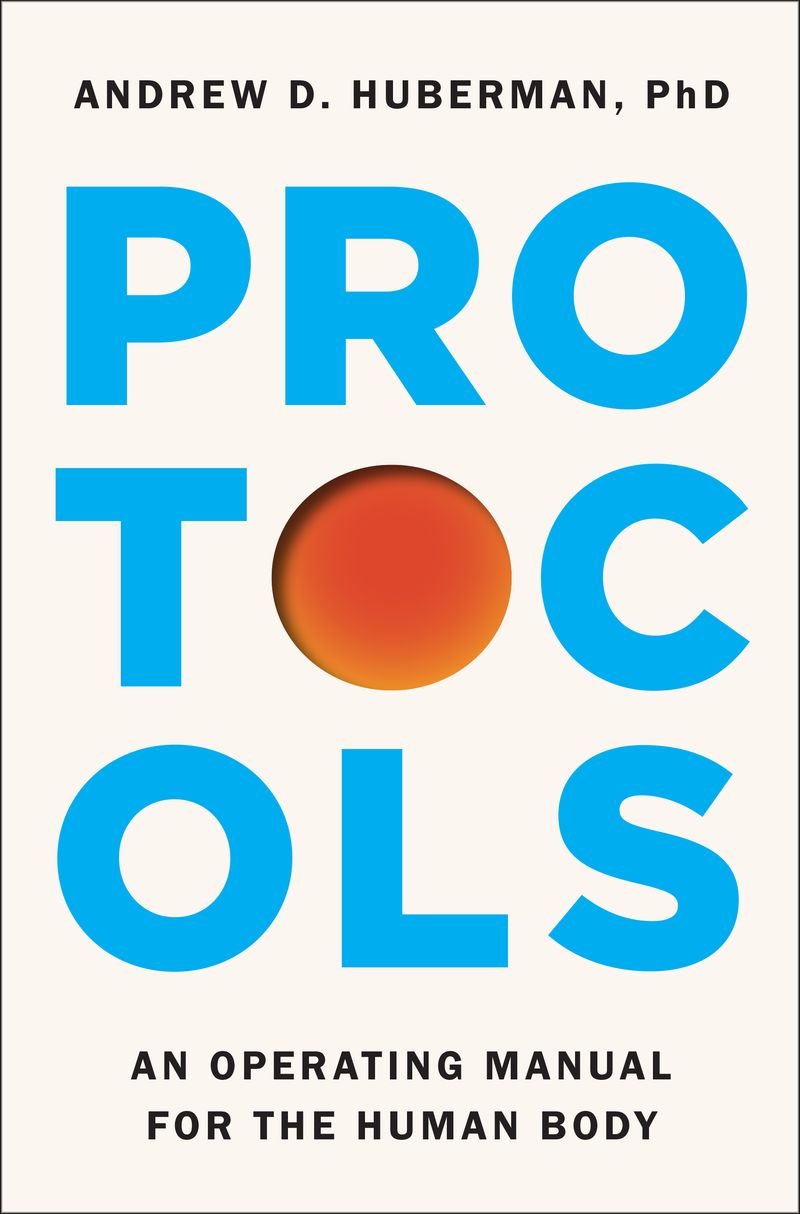
Cover: Simon & Schuster.
So we did what we always do before anything touches your study plan. We took the claims, pulled the primary studies, and checked which ones hold up for the kind of learning the EPPP demands: facts, concepts, and multiple choice questions. Some claims held up beautifully. One very popular claim did not, and I want to tell you about both, because you will run into these ideas on podcasts and in study groups, and you deserve to know which ones are load-bearing.
Here is what we changed, what we already had, and the one thing we refused to build.
What we changed this week
A five minute break between your lesson and your quiz
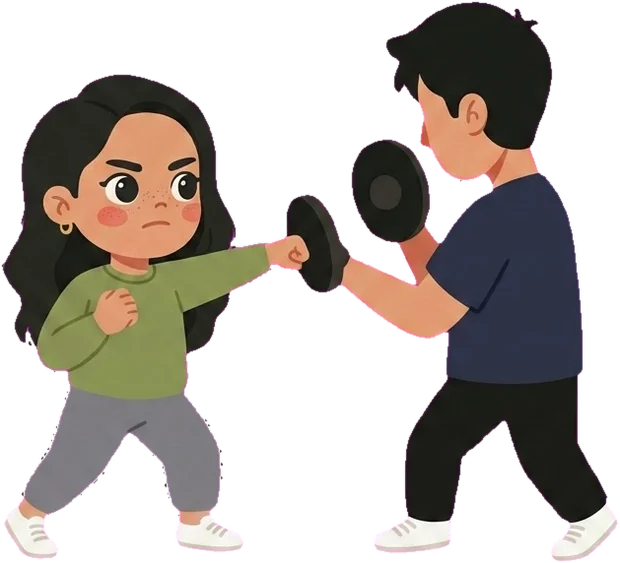
When you finish a lesson, the quiz button now says "Take 5 then quiz." Tap it and you get a five minute break with a slow breathing animation and a countdown before the quiz starts. You can skip it, but I hope you mostly will not.
Two reasons it exists.
First, rest right after learning helps new material settle. Your brain replays what you just studied during quiet moments, and giving it a few minutes with no new input is one of the cheapest study upgrades that exists. The one rule: the break only counts if you stay off your phone. Five minutes of scrolling is five minutes of new input, which is the opposite of the point.
Second, the breathing pattern on that screen is not decoration. The circle paces you through a specific pattern: a deep inhale through the nose, a short second inhale to top the lungs off, then a long slow exhale. Repeated for five minutes, this is the exact practice tested in a randomized controlled trial from Stanford (Balban et al., 2023), where five minutes a day of it improved mood and lowered breathing rate, and did better than an equal amount of mindfulness meditation. Full disclosure, because we always disclose: Huberman and David Spiegel are authors on that trial, and it was a remote study with self-reported mood. It is still a real controlled trial, and slower breathing before a quiz costs you nothing. You walk into your questions calmer, and if test-day nerves are a bigger story for you, we keep a full toolkit for EPPP test anxiety. If you have a respiratory or cardiac condition, treat any breathing exercise as something to run past your physician, not a treatment.
Updated lessons in Learning and Memory and Test-Taking Skills
Our Memory lesson now teaches desirable difficulties, the finding that practice which feels harder often builds stronger memory, and why your performance during practice is not the same as your learning. Our study-system lessons now cover spaced practice properly: two shorter visits to a topic, days apart, beat one long visit of the same total time. If you want a 12-week plan built on that spacing, it already exists. These are EPPP-testable concepts and study skills at the same time, which is a nice deal.
What we already had, because the science demanded it
Some of the book's strongest advice describes things this program was built on, and the studies behind them are ones we have now read cover to cover.
A quiz after every lesson. In classic experiments (Roediger & Karpicke, 2006), students who reread a passage beat students who were quizzed on it when tested five minutes later. Two days later the quizzed students were ahead, and a week later the gap had grown. The rereaders were also more confident while remembering less. That is why finishing a lesson here always ends in retrieval, and why "I read it and it feels familiar" is the feeling we are protecting you from. We wrote up the full evidence on practice testing, including its honest limits, if you want the deeper dive.
An explanation on every answer. A controlled study (Butler et al., 2013) found that feedback explaining why an answer is correct beat feedback that only showed the correct answer, specifically when learners later faced brand-new questions that required applying the idea. The real exam will not reuse our questions. It will reuse our ideas. That is why every question you answer here comes with an explanation, and why reading it is the studying.
Wrong answers are not damage. A series of studies found that a failed attempt followed by corrective feedback still improves later memory, and in some experiments whether the attempt succeeded mattered less than making it. So when a weak-domain drill stings, the sting plus the explanations is the repair happening. We updated the copy across the product to say this plainly, because too many candidates read a low practice score as evidence about themselves instead of evidence about where to aim next. The readiness question is separate, and it has its own data: what a full-length practice exam score actually predicts.
The claim we refused to ship
You may have heard that there is a scientifically perfect difficulty for practice: 85 percent accuracy, the "85 percent rule."
We considered rebuilding our drills around it, mixing in easier questions so your sessions land near that number. Before writing a line of code, we pulled the source (Wilson et al., 2019). It is a genuinely elegant paper. It is also a mathematics and simulation paper. The 85 percent figure is derived for a specific kind of machine learning on two-choice tasks, demonstrated on a perceptron, a digit-classifying network, and a model of perceptual learning in monkeys. There is no human learning experiment in it, and the authors themselves say the optimum moves when the assumptions change.
Nothing in the human research on learning facts and concepts establishes a magic practice percentage. What the human research does show is the opposite direction: harder retrieval, even failed retrieval, followed by good feedback, supports durable learning. Padding your drills to make the number feel nicer would inflate your session average without changing how the weak material gets learned.
So your weak-spot drills stay honest. If we ever blend in review items, it will be because spaced review is due, and we will judge the change by delayed performance on questions you have never seen, not by whether the scoreboard felt better. When a claim does not survive the check, it does not ship. That is the standard, and it applies to Huberman, to us, and to every study tip that reaches you through this program.
The four rules, if you only remember four things
- Test yourself instead of rereading. Retrieval is the studying.
- Space it out. Come back to a topic two to four days later and end the return visit with a quiz.
- Let practice sting, then read the explanation. Errors with feedback are learning events, and a short error log turns them into your study plan.
- Protect sleep after study days. Consolidation happens offline, and no late-night hour of tired review is worth what it costs you there.
If you want to feel the difference instead of taking my word for it, take the free practice exam. One hundred questions, an explanation after every answer, no signup. Notice how different a miss feels when the explanation lands. That feeling is the method.
None of this is medical advice, and breathing exercises complement stress care rather than replace it.
This is also not a one-time update. We are incorporating these protocols throughout the program to enhance your learning experience inside: the break before your quiz, the way lessons teach, the way your drills and reviews are built, and what the product says to you after a hard set. Every protocol that survives the evidence check gets wired into the place where you actually study, so the science works for you without you having to think about it. You bring the five minutes. We bring the rest.

Anders Chan, Psy.D. is a licensed psychologist and the founder of thePsychology.ai. He passed the EPPP on his first attempt with a score of 588 after starting from a 19% diagnostic.